Numina: an aspiration system with storage and briquetting for MDF and particleboard
2026. Aton Service has implemented an aspiration system for the storage and briquetting of MDF and particleboard at the Numina production facility in Moldova. More

2021 year.
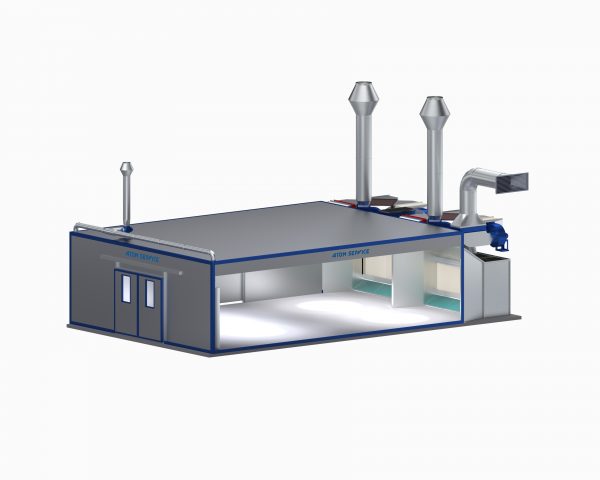
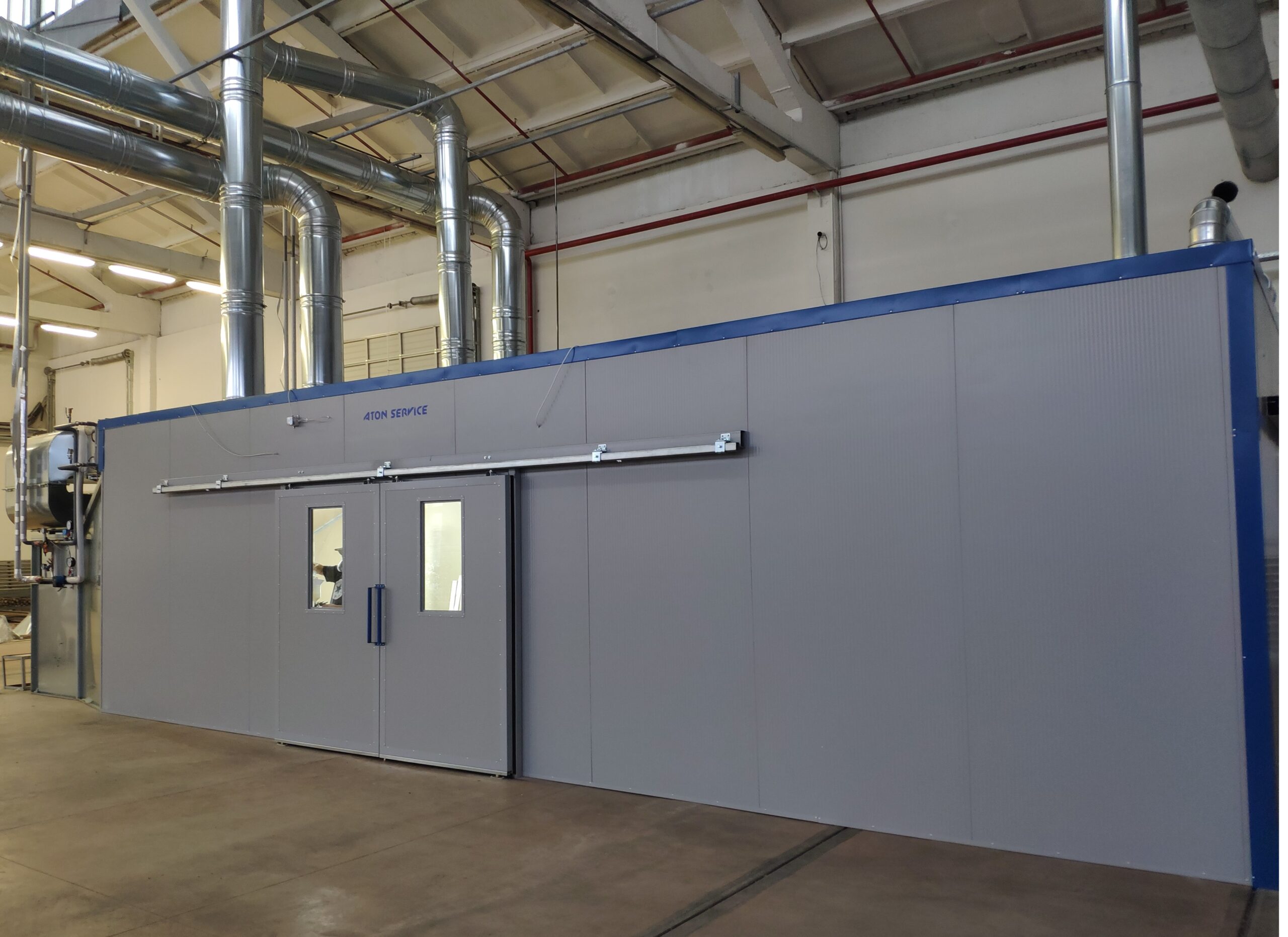
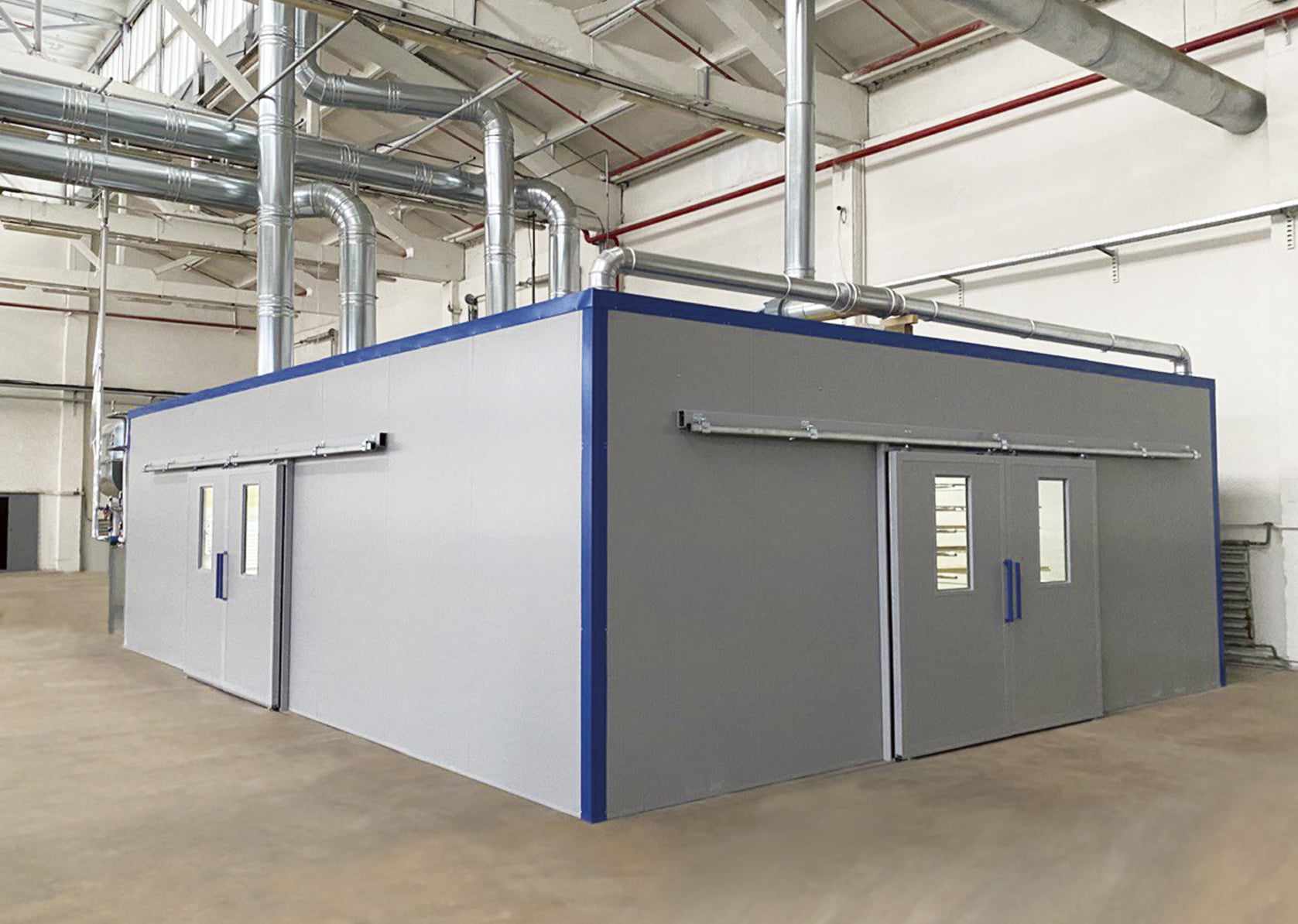
We have installed a сomplex for painting 2 TBS – 3 DN.REC.BOX at the TQ Project furniture production facility.
The TBS painting complex is a professional solution for organizing a paint and varnish area in the woodworking, furniture and metalworking industries. The complex creates overpressure inside the complex and divides the air flow into painting and drying areas.
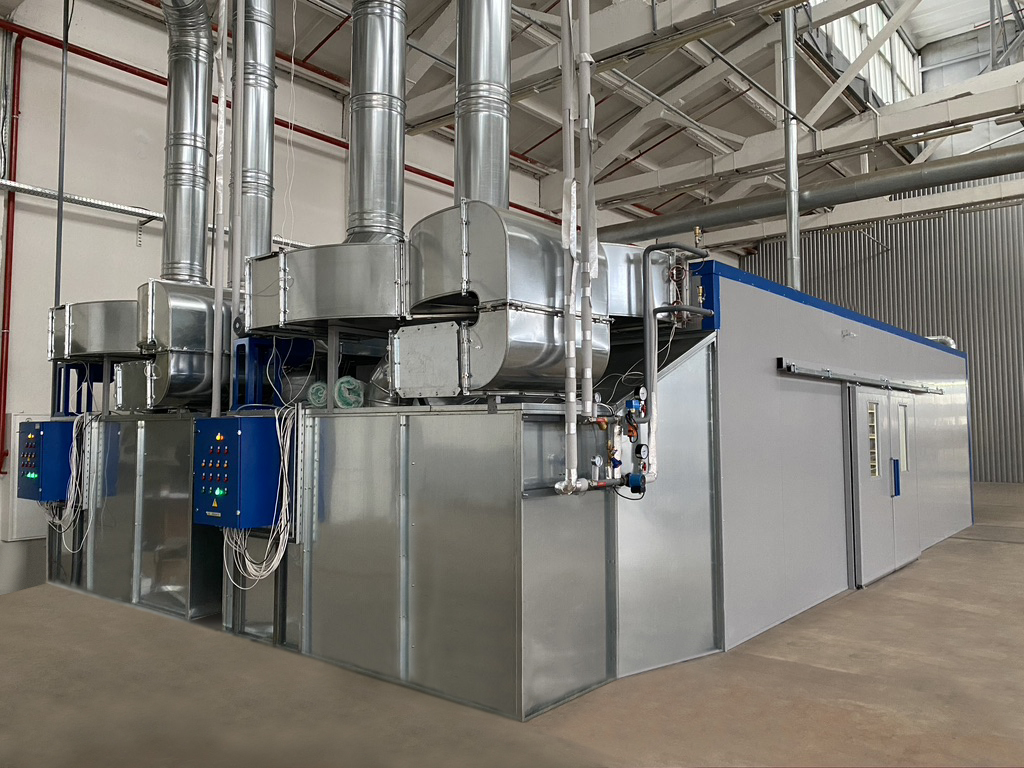
The painting area is equipped with a TBS chamber, an air handling unit with a water heater to maintain the required temperature (from -22°C to 20°C) and plenum boxes to evenly distribute the air flow. The air handling unit provides overpressure, which makes it possible to achieve the maximum degree of dedusting in the painting area, significantly improving the quality of the products.
The TBS painting complex takes care of the safe and efficient work of the painter. In particular, the absence of a draft eliminates the possibility of employee illness.
The air handling unit in the drying area and exhaust columns maintain the required temperature and create a horizontal air flow, allowing the painted parts to dry evenly.
To remove contaminated air, TQ Project has installed 2 TBS-3DN exhaust stands with RM-AS400/4 kW exhaust fans with a capacity of 5400 m³/h (total for 2 stands is 10800 m³/h)
The TBS-3DN stand is equipped with two stages of filtration: the first is a labyrinth-type filter, the second is a fiberglass filter.
Air is removed from the drying area through exhaust corner columns and is provided by an exhaust fan AS-N604/0.25 kW with a capacity of 800 m³/h.
The air supply to the painting area is 10% higher than the amount of air to be cleaned, ensuring that contaminated air from adjacent rooms is not drawn in.
The air supply is provided by 2 RL-AS-350/3 kW fans with a capacity of 6400 m³/h (total capacity – 12800 m³/h). Of these, 12000 m³/h is supplied to the painting area and 800 m³/h to the drying area.
An air filter with a first stage of purification, a heat recuperator, and a water heater (35 kW) are installed for air purification and heating. The installation of a heat recuperator at each air treatment unit saves 57 kW (114 kW total for two units). For example, without heat recuperators, the required power of water heaters is 92 kW per unit (instead of 35 kW).
Air distribution in the painting and drying areas is provided by plenum boxes with an additional degree of air purification (second stage, purification class F5/EU5).
Air intake is carried out through an external air intake grille, in front of which an air valve with an actuator is installed in front of it, which opens/closes depending on the system operation.
The system is controlled by a special control panel, which is convenient and efficient.
TQ Project is a high-tech company equipped with modern Austrian equipment of the new generation. TQ Project uses only high-quality wood and other components from trusted and certified suppliers.


